
The UAE’s healthcare sector is moving beyond basic digitalisation. Hospitals, clinics and healthcare organisations are increasingly adopting Artificial Intelligence, Healthcare SaaS, predictive analytics, connected systems and data-driven platforms to improve patient experiences and operational efficiency. As the country continues to strengthen its position as a healthcare and technology hub, digital infrastructure is becoming an increasingly important part of how healthcare is delivered.
The next stage is not simply about adding more software. It is about connecting technologies so that patients, healthcare professionals and hospital administrators can access relevant information at the right time. This shift from isolated digital tools to connected healthcare ecosystems could fundamentally change how healthcare organisations operate in the UAE.
From Digital Healthcare to Connected Healthcare
Many hospitals already use digital systems for appointments, patient records, billing, laboratory management and administration. However, these systems can operate independently, creating information silos and forcing healthcare professionals to move between different platforms.
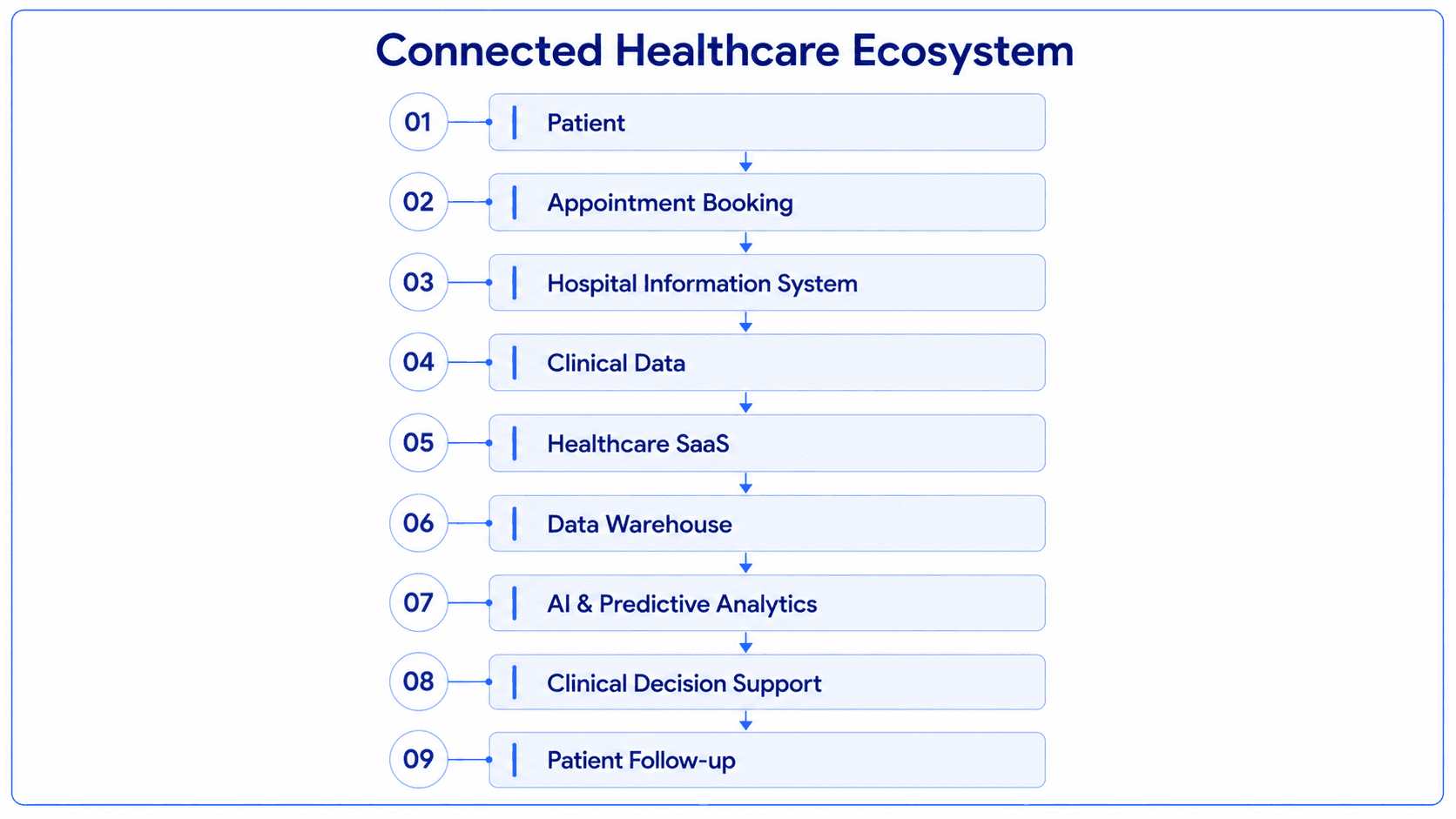
Connected healthcare takes a different approach. It brings multiple technologies and workflows together so information can move efficiently across the organisation. A connected healthcare ecosystem can integrate Hospital Information Systems, Electronic Health Records, Patient Portals, Online Appointment Booking, Laboratory Systems, Pharmacy Platforms, Hospital Management Systems, Healthcare SaaS, AI and Predictive Analytics.
The objective is to create a more seamless flow of information throughout the patient and operational journey.
Key benefits:
Connected patient information
Faster access to relevant data
Reduced administrative complexity
Better coordination between departments
More informed healthcare decisions
AI Will Become Part of Everyday Healthcare
Artificial Intelligence is expected to play an increasingly important role in healthcare delivery. Instead of replacing doctors and healthcare professionals, AI can act as an additional layer of intelligence, helping teams analyse large volumes of information and identify patterns more efficiently.
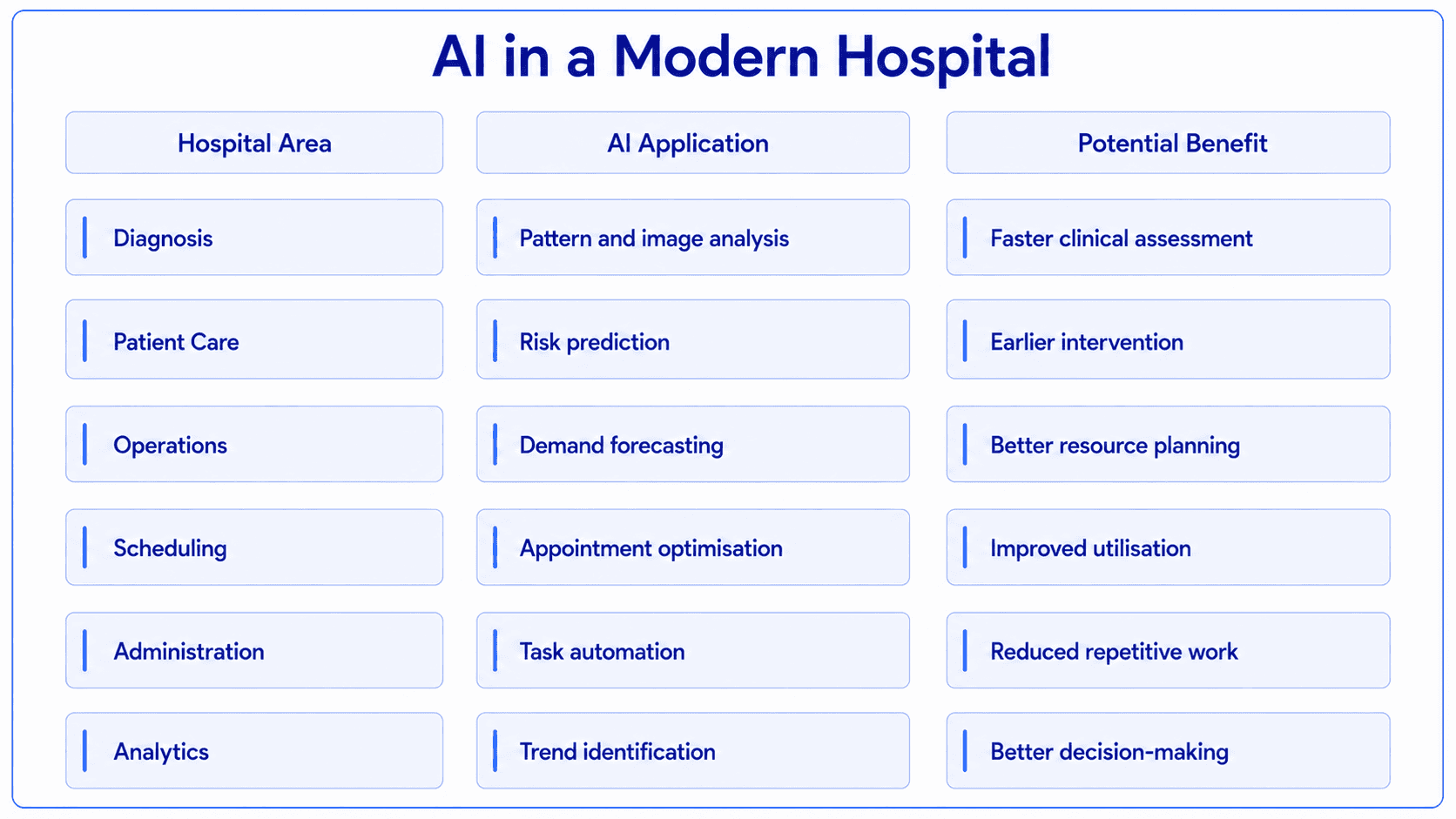
AI can support medical imaging analysis, clinical decision support, patient risk assessment, hospital resource planning, appointment scheduling and administrative automation. As these capabilities mature, AI could become integrated into everyday hospital workflows rather than remaining limited to experimental or specialised projects.
Healthcare providers can explore AI applications across areas such as:
Clinical decision support
Medical image analysis
Patient risk prediction
Predictive diagnostics
Hospital resource planning
Appointment optimisation
Administrative automation
Healthcare analytics
Healthcare SaaS Will Enable Greater Scalability
Healthcare organisations need technology that can evolve as their requirements change. Traditional software implementations can require significant infrastructure and maintenance, while cloud-based Healthcare SaaS can provide a more flexible approach to delivering digital capabilities.
Healthcare SaaS platforms can support:
Patient management
Appointment scheduling
Electronic health records
Billing and payments
Clinical workflows
Staff management
Reporting and analytics
Patient engagement
Telehealth services
Inventory management
For growing healthcare providers, scalability becomes particularly important. A digital healthcare platform should not only solve today's operational challenges but also support future services, additional locations and increased patient volumes.
Patient Portals Will Reshape the Patient Experience
Patients increasingly expect healthcare to be as accessible and convenient as other digital services they use every day. A Patient Portal can become a central digital touchpoint where patients interact with their healthcare provider before, during and after an appointment.
Depending on the platform, patients can use a portal to:
Book and manage appointments
View medical information
Access test results
Receive prescriptions
Communicate with healthcare teams
Manage healthcare documents
Receive appointment reminders
Make payments
A well-designed patient portal can reduce manual communication while giving patients greater visibility and control throughout their healthcare journey.

Predictive Analytics Can Move Healthcare Towards Prevention
Healthcare data has enormous potential when it can be transformed into actionable insights. Hospitals generate information through patient records, appointments, diagnostics, treatments, billing systems and operational workflows.
Predictive Analytics can analyse this information to identify patterns and potential risks. For example, healthcare organisations can use predictive models to support patient risk assessment, hospital demand forecasting, readmission analysis, staffing requirements and resource planning.
Potential applications include:
Patient risk prediction
Hospital demand forecasting
Readmission analysis
Staff planning
Resource allocation
Preventive healthcare
Operational forecasting
This can help healthcare providers move from a purely reactive model towards more proactive and data-informed care.
Data Warehouses Will Power Healthcare Intelligence
AI and predictive analytics are only as effective as the data supporting them. Healthcare organisations often have information distributed across multiple applications and departments, making it difficult to create a complete view of operations or patient journeys.
A healthcare data warehouse can bring relevant information from different systems into a structured environment for analytics and reporting. This creates a stronger foundation for dashboards, business intelligence, predictive models and AI applications.
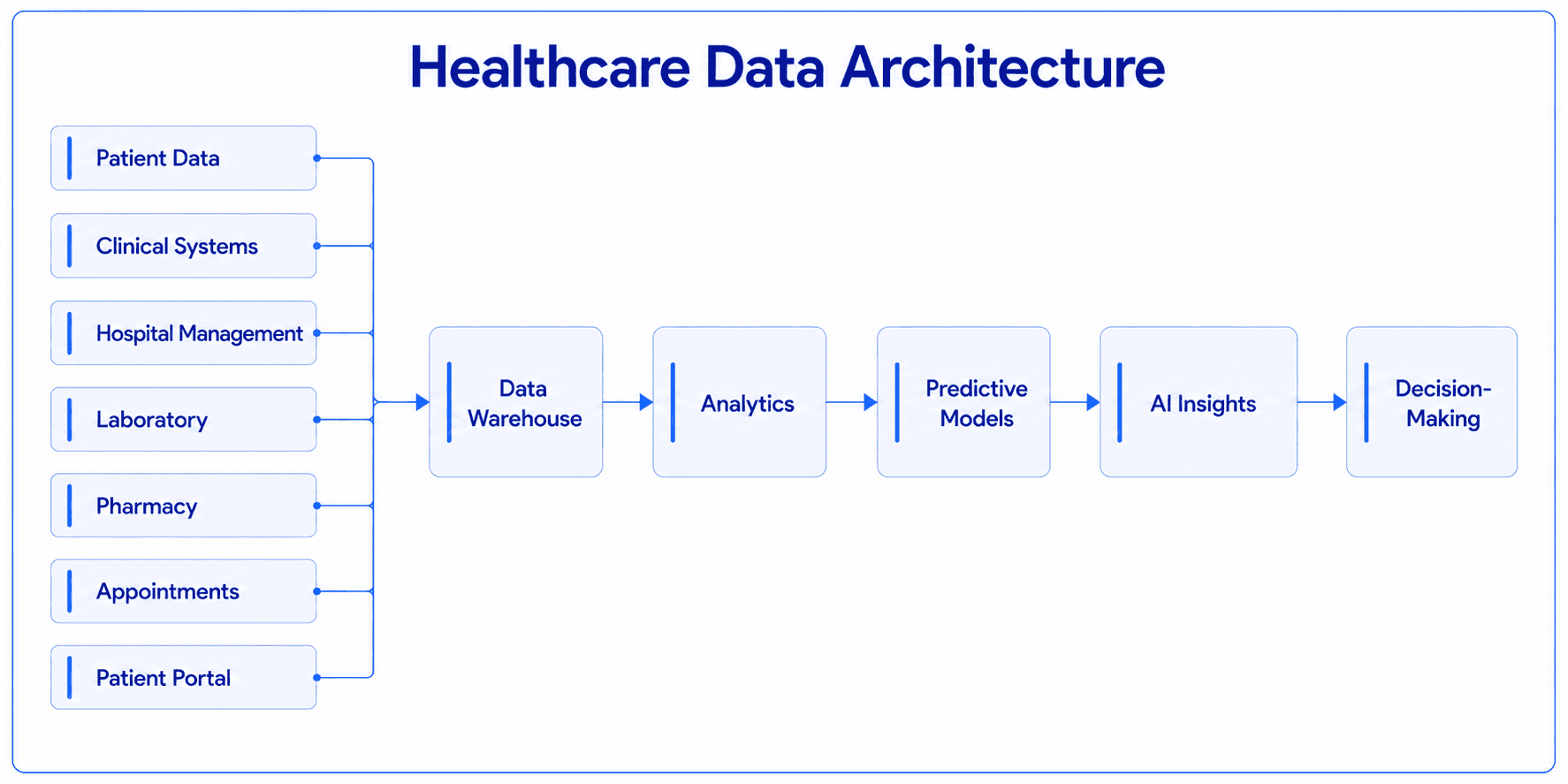
The key value is not simply storing more data. It is transforming fragmented information into insights that healthcare professionals and administrators can actually use.
Interoperability Will Become a Strategic Priority
Adding more healthcare applications does not automatically create a smarter hospital. If different platforms cannot communicate effectively, healthcare professionals may still face fragmented information and disconnected workflows.
Interoperability will therefore become increasingly important as UAE healthcare organisations adopt more digital platforms.
A connected healthcare environment should allow relevant information to move securely between:
Hospital Information Systems
Electronic Health Records
Laboratory systems
Pharmacy systems
Patient portals
Healthcare SaaS platforms
Billing systems
AI and analytics platforms
The principle is simple: connect systems, not just applications.
Healthcare Technology Will Extend Beyond Hospitals
The future of healthcare will not be limited to what happens inside hospital buildings. Digital platforms can extend healthcare services across the patient's broader journey, from online appointment booking and virtual consultations to digital follow-ups and remote monitoring.
This creates the possibility of a more continuous healthcare experience. Patients can interact with providers digitally before visiting a facility and continue receiving information and support after their appointment or treatment.
Connected devices and remote monitoring technologies can add another layer by generating health-related information outside traditional clinical environments.
What UAE Healthcare Providers Need to Consider
Technology adoption should not be driven purely by the availability of new tools. Healthcare organisations need to evaluate whether a solution addresses a genuine clinical, operational or patient-experience requirement.
Before implementing new healthcare technology, organisations should consider:
Patient experience: Does technology make healthcare easier and more accessible?
Clinical efficiency: Can it help healthcare professionals work more effectively?
Operational efficiency: Can it improve workflows and resource management?
Data quality: Is the underlying information accurate and reliable?
Scalability: Can the platform support future growth?
Interoperability: Can it integrate with existing systems?
Security: Can sensitive healthcare information be appropriately protected?
User experience: Can healthcare professionals and patients use it easily?
A technically advanced platform can still fail if it creates unnecessary complexity for the people expected to use it.

The Future of Healthcare Technology in the UAE
The UAE is moving towards a healthcare ecosystem where technology is becoming increasingly connected, intelligent and patient-focused. AI can provide intelligence, Healthcare SaaS can provide scalability, data warehouses can create a foundation for analytics, patient portals can improve engagement, and predictive analytics can support more proactive healthcare.
The real opportunity is not to implement each technology independently. It is to bring these capabilities together into an ecosystem that helps healthcare professionals work more effectively while giving patients a smoother and more connected experience.
For healthcare organisations planning their next stage of digital transformation, choosing the right technology strategy and implementation partner can make the difference between disconnected digital tools and a truly integrated healthcare ecosystem.
FAQs
1. What is the future of healthcare technology in the UAE?
The future of healthcare technology in the UAE is moving towards connected, intelligent and patient-focused ecosystems powered by AI, Healthcare SaaS, predictive analytics, data warehouses and interoperable systems.
2. How is AI transforming healthcare in the UAE?
AI can support areas such as medical image analysis, clinical decision support, patient risk prediction, predictive diagnostics, hospital resource planning, appointment optimisation and administrative automation.
3. What is Healthcare SaaS?
Healthcare SaaS is a cloud-based approach to delivering healthcare software and digital capabilities. It can support patient management, appointments, electronic health records, billing, clinical workflows, analytics, patient engagement and telehealth services.
4. How can predictive analytics improve healthcare?
Predictive analytics can analyse healthcare data to identify patterns and potential risks. Applications include patient risk prediction, demand forecasting, readmission analysis, staff planning, resource allocation and preventive healthcare.
5. What is a connected healthcare ecosystem?
A connected healthcare ecosystem integrates systems such as Hospital Information Systems, Electronic Health Records, patient portals, laboratory systems, pharmacy platforms, Healthcare SaaS, AI and predictive analytics to enable information to move efficiently across an organisation.
6. How do patient portals improve the healthcare experience?
Patient portals provide a central digital touchpoint where patients can book appointments, view medical information, access test results, receive prescriptions, communicate with healthcare teams, manage documents and make payments.
7. What is a healthcare data warehouse?
A healthcare data warehouse brings relevant information from different healthcare systems into a structured environment for analytics and reporting, creating a foundation for dashboards, business intelligence, predictive models and AI applications.
8. Why is interoperability important in healthcare technology?
Interoperability allows different healthcare systems and applications to communicate effectively. It can help reduce fragmented information and enable relevant data to move securely between clinical, administrative, patient and analytics platforms.
9. How can healthcare technology improve hospital operations?
Healthcare technology can support operational efficiency through AI-powered resource planning, appointment optimisation, predictive analytics, connected systems, automated workflows and centralised access to relevant information.
10. How can Instalogic help with healthcare digital transformation in the UAE?
Instalogic helps healthcare organisations build scalable and connected technology solutions, including Healthcare SaaS, hospital management systems, connected platforms, data-driven solutions and digital patient experiences.
Build a Smarter Healthcare Future with Instalogic
Instalogic helps healthcare organisations embrace digital transformation through scalable, connected and intelligent technology solutions. From healthcare SaaS and hospital management systems to connected platforms, data-driven solutions and digital patient experiences, Instalogic can help organisations build technology that is designed around real healthcare needs.
Ready to transform your healthcare operations? Connect with Instalogic today to explore how smarter technology can improve efficiency, strengthen patient experiences and prepare your organisation for the future of healthcare in the UAE.
