
Dubai has rapidly emerged as one of the Middle East's leading healthcare destinations. Driven by population growth, medical tourism, government investment, and the expansion of private healthcare providers, the city's healthcare ecosystem continues to create new employment opportunities across clinical and non-clinical disciplines.
Today's hospitals are no longer focused solely on delivering medical treatment. They operate as technology-enabled healthcare ecosystems where clinical expertise, operational excellence, patient experience, and digital innovation work together to deliver better outcomes.
For professionals exploring International Modern Hospitals Careers, understanding where opportunities exist, how recruitment works, and what employers expect can provide a significant advantage in Dubai's competitive healthcare job market.
Why Dubai's Healthcare Sector Continues to Expand
Dubai's healthcare industry continues to experience sustained growth as hospitals invest in advanced medical infrastructure, specialized treatment centers, digital healthcare technologies, and patient-centered care models.
Government initiatives supporting healthcare innovation, combined with increasing demand from residents and international patients, have encouraged hospitals to expand their workforce across multiple departments.
This growth is creating opportunities not only for doctors and nurses but also for professionals in administration, technology, operations, analytics, and patient experience.
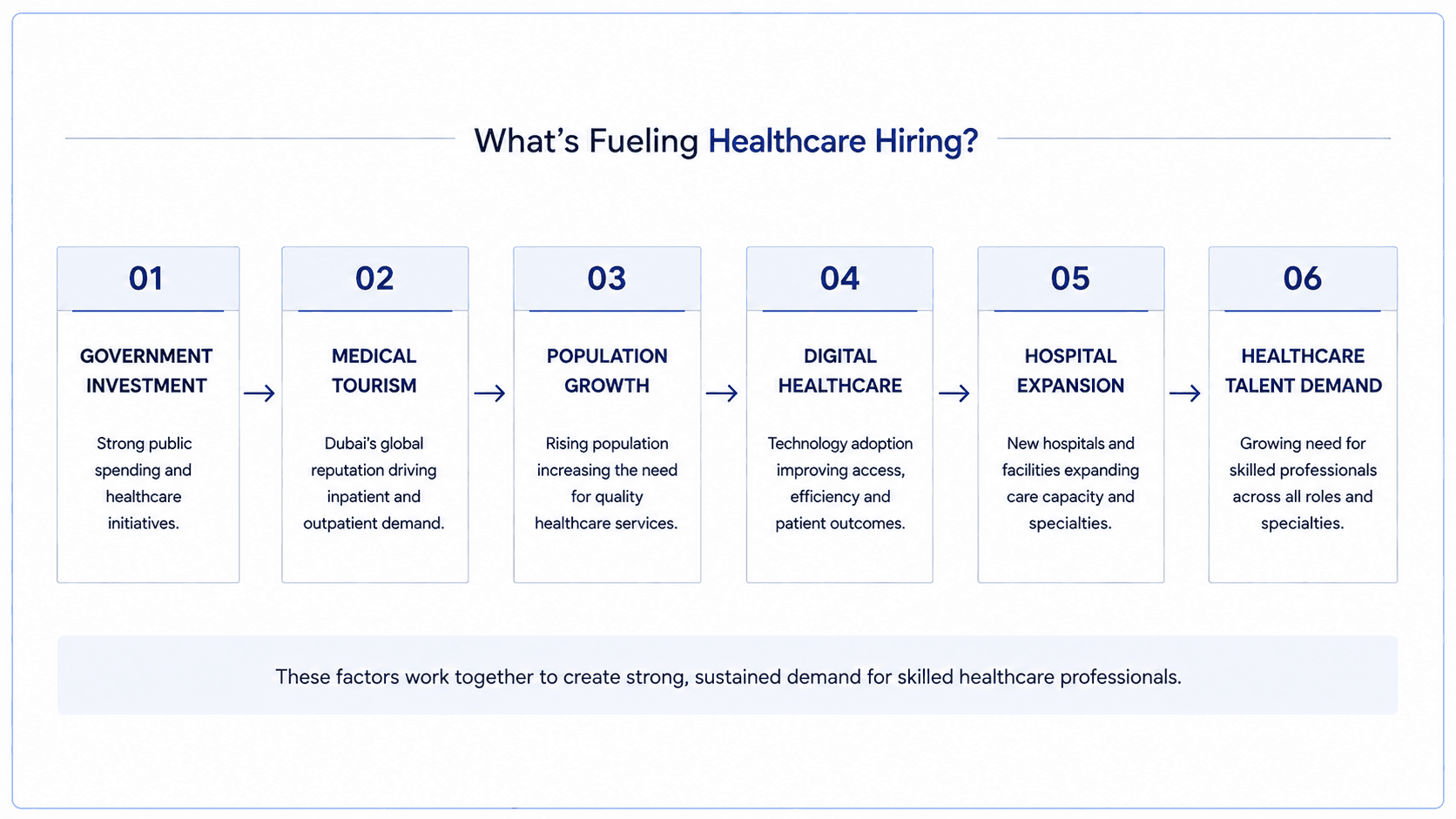
Before exploring the different career opportunities, it's important to understand how modern hospitals operate. Unlike traditional healthcare facilities, today's hospitals rely on multidisciplinary teams that work together to provide seamless patient care.
The Modern Hospital Workforce: More Than Clinical Care
Many professionals assume hospitals primarily recruit doctors and nurses. While clinical teams remain the foundation of healthcare delivery, modern hospitals function as highly integrated organizations that require expertise across numerous functions.
Alongside physicians, nurses, and surgeons, hospitals depend on laboratory specialists, pharmacists, rehabilitation experts, finance professionals, HR teams, operations managers, quality specialists, patient care coordinators, administrators, data analysts, health IT professionals, and cybersecurity experts.
Each department contributes to improving patient outcomes, maintaining operational efficiency, ensuring regulatory compliance, and supporting digital transformation initiatives.
The diversity of today's workforce means healthcare professionals have more career pathways than ever before. Whether your background is clinical, technical, or operational, hospitals now offer opportunities across a wide range of specialties.
Where International Modern Hospitals Are Hiring
Healthcare recruitment in Dubai spans multiple departments, allowing professionals with different skill sets to build rewarding careers.
1. Clinical Services
Clinical professionals remain at the heart of every hospital.
Common roles include:
Specialist Doctors
General Practitioners
Surgeons
Registered Nurses
ICU Nurses
Emergency Care Nurses
Operating Theatre Staff
Midwives
2. Diagnostic & Allied Healthcare
Modern healthcare depends heavily on accurate diagnosis and rehabilitation services.
Popular positions include:
Pharmacists
Laboratory Technologists
Radiographers
Physiotherapists
Respiratory Therapists
Nutrition Specialists
3. Hospital Administration
Behind every successful healthcare organization is a highly efficient administrative team responsible for ensuring smooth day-to-day operations.
Key positions include:
Hospital Administrators
HR Professionals
Finance Managers
Insurance Coordinators
Patient Relations Executives
Procurement Specialists
4. Digital Health & Technology
As hospitals continue adopting digital healthcare systems, demand for technology professionals continues to grow.
High-demand roles include:
Health Informatics Specialists
EMR Administrators
Data Analysts
Healthcare IT Engineers
Cybersecurity Professionals
Digital Transformation Managers
Healthcare careers are evolving beyond traditional clinical roles. Technology, automation, and healthcare data are opening entirely new career paths that combine medical knowledge with digital expertise.
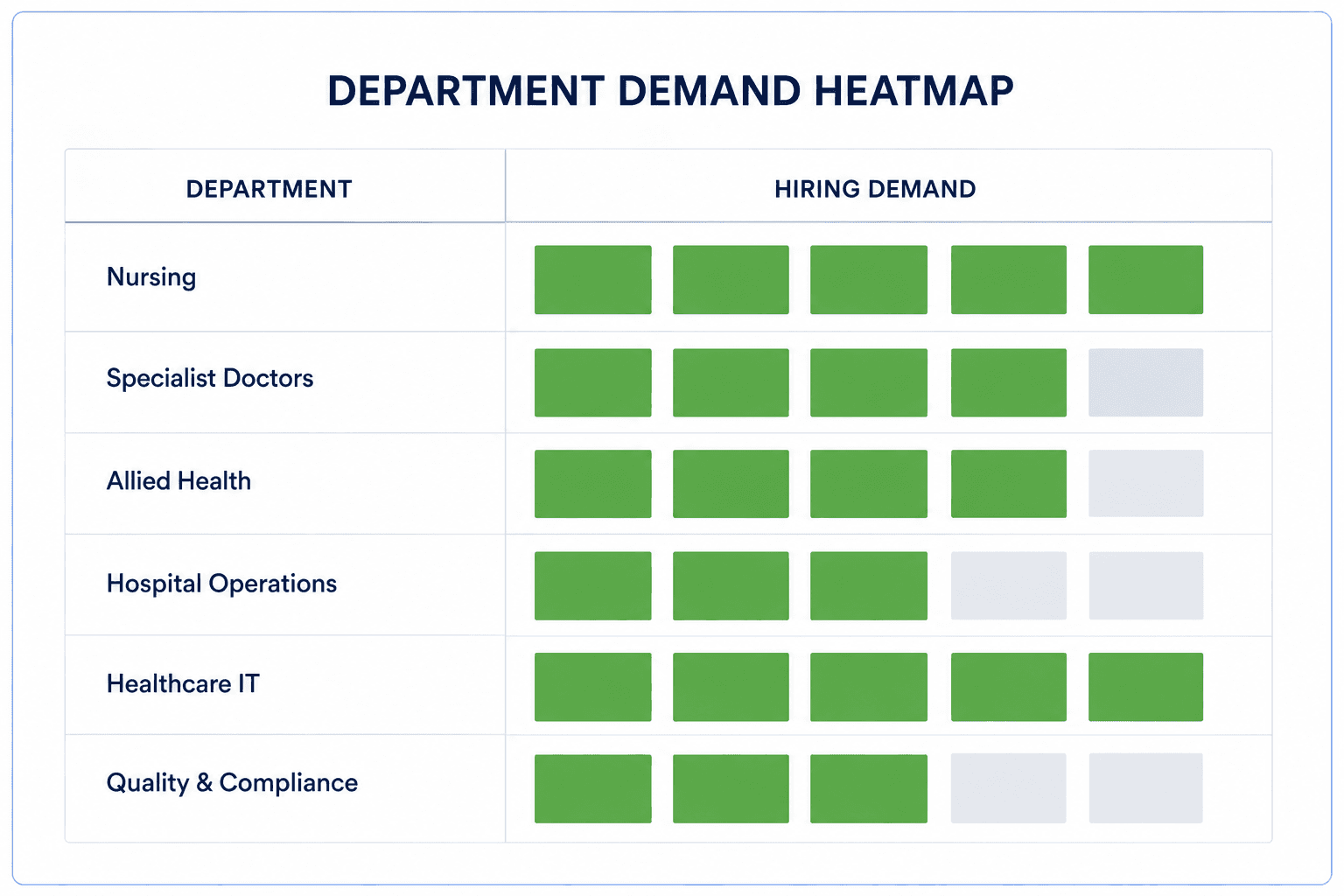
Healthcare Hiring Demand by Department
Recruitment demand varies across departments, but hospitals consistently invest in teams that directly improve patient care, operational performance, and digital capabilities.
Clinical services continue to account for the largest share of hiring, while digital health, healthcare IT, and data analytics have become some of the fastest-growing functions within modern hospitals.
As hospitals become smarter and increasingly connected, digital transformation is reshaping how healthcare is delivered.
The Rise of Smart Hospitals
Healthcare is becoming increasingly digital.
Many hospitals now rely on integrated healthcare platforms, electronic medical records, connected patient systems, AI-assisted diagnostics, predictive analytics, and data-driven decision-making.
These technologies help improve clinical accuracy, reduce administrative workload, enhance patient experience, and support more efficient hospital operations.
Across the UAE, hospitals continue investing in connected healthcare ecosystems that improve collaboration between departments while enabling better patient outcomes.
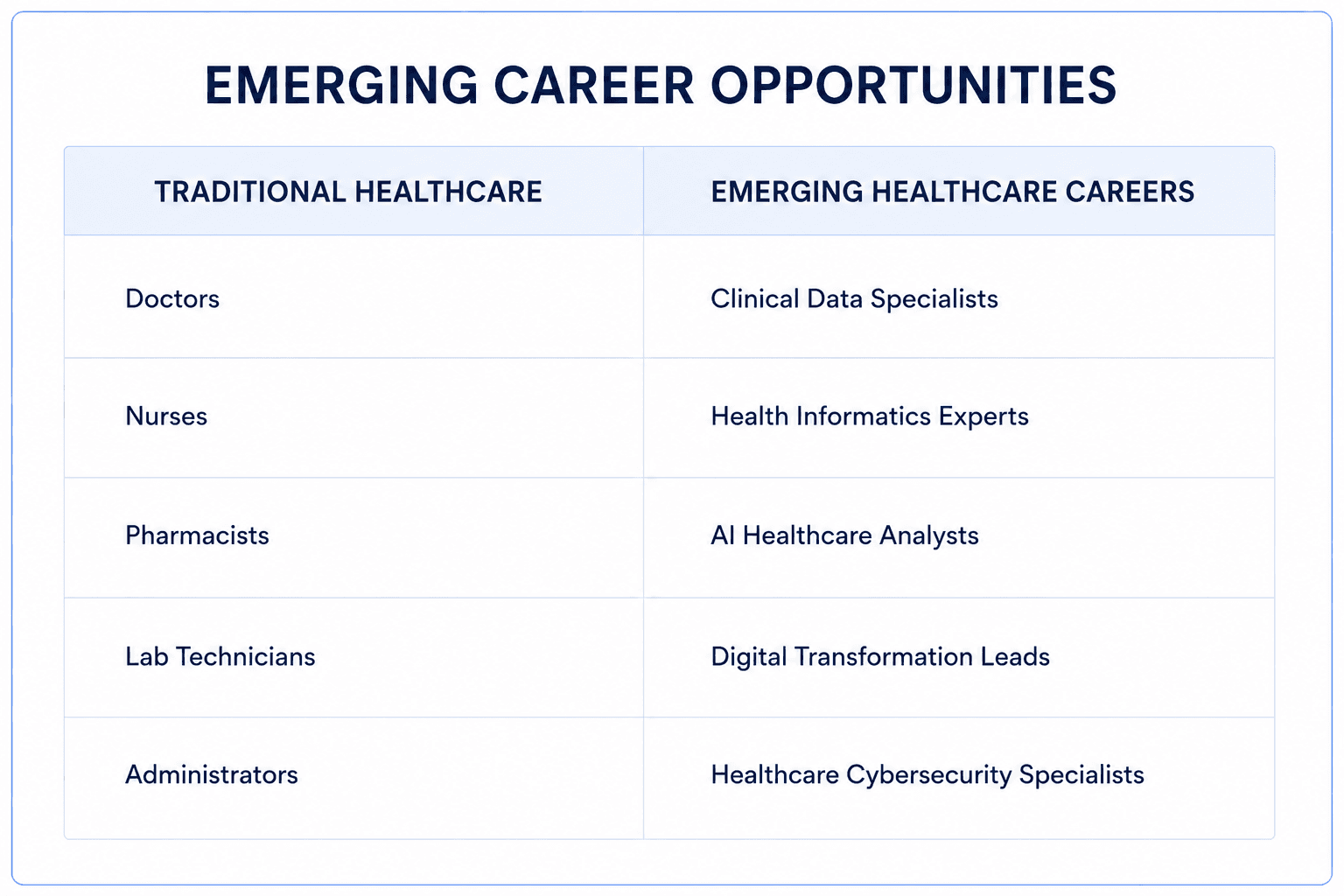
For healthcare professionals, this means future career opportunities will increasingly require a combination of clinical expertise and digital literacy.
What Recruiters Look For
Modern healthcare recruiters evaluate candidates on much more than academic qualifications.
Clinical knowledge and patient care remain essential, but employers also seek professionals who demonstrate strong communication skills, collaboration, professionalism, and adaptability.
Hospitals increasingly value candidates who can work confidently with electronic health records, telemedicine platforms, AI-enabled healthcare systems, and other digital technologies.
Leadership potential, problem-solving ability, continuous learning, and a willingness to embrace innovation have become equally important differentiators in today's hiring process.
Professionals who combine technical expertise with interpersonal skills and a growth mindset are often better positioned for long-term career success.
Understanding what employers value allows candidates to prepare more effectively and stand out throughout the recruitment process.
Recruitment Journey in Modern Hospitals
While recruitment processes vary between hospitals, most international healthcare organizations follow a structured hiring workflow.
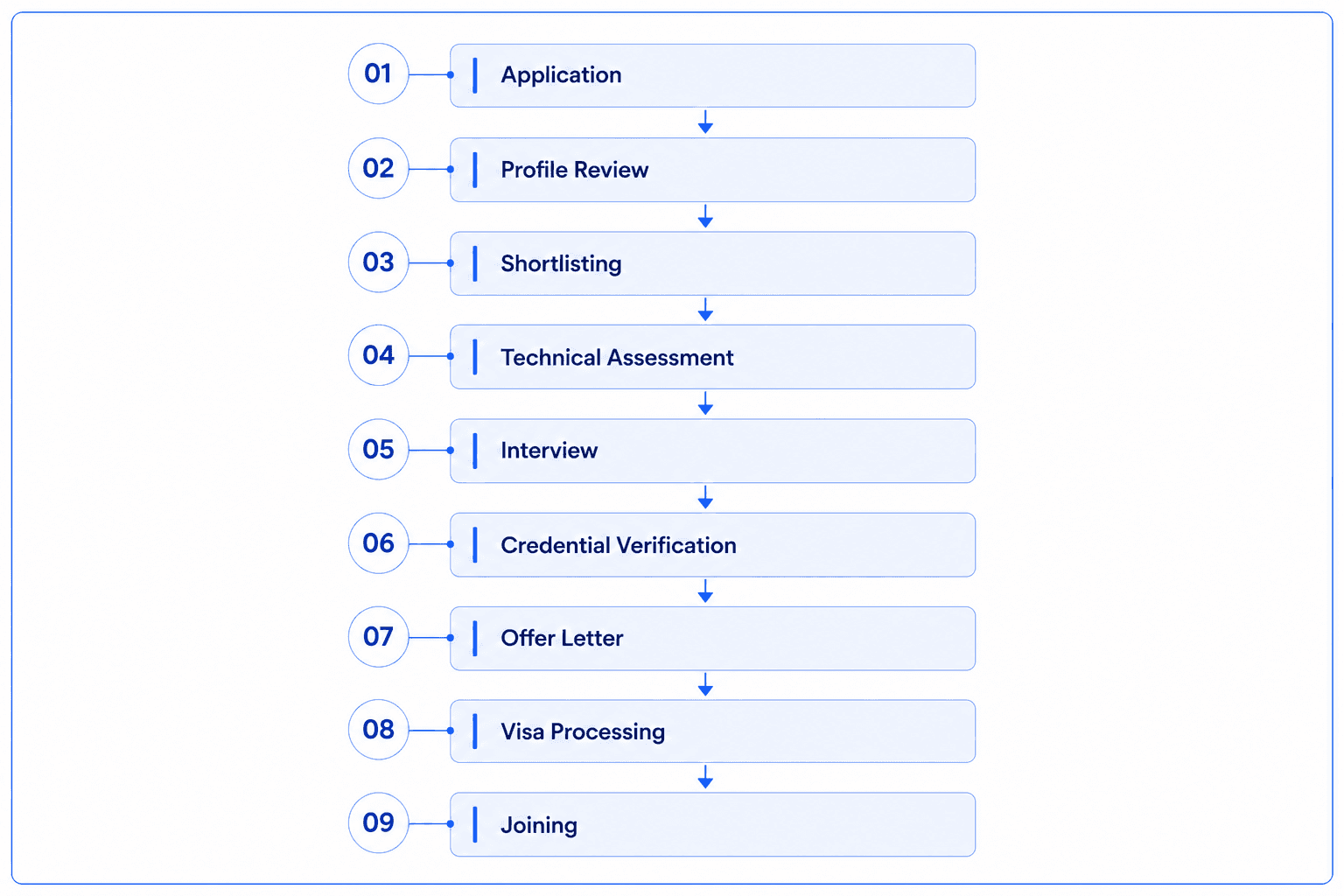
Preparing the required certifications, licenses, professional references, and supporting documents in advance can significantly improve the recruitment experience.
Why Professionals Choose Dubai
Dubai continues attracting healthcare professionals from around the world because it offers competitive salaries, advanced medical facilities, exposure to international standards, and opportunities to work with multicultural teams.
The city's healthcare ecosystem also provides access to cutting-edge technologies, continuous professional development, and long-term career progression across both clinical and non-clinical disciplines.
For many professionals, Dubai offers the opportunity to build an international healthcare career while working in one of the region's most innovative healthcare environments.
The Future of International Modern Hospitals Careers
Healthcare organizations are evolving into digitally connected care ecosystems where technology supports every stage of the patient journey.
As hospitals continue investing in AI, health informatics, cybersecurity, analytics, automation, and connected healthcare platforms, future opportunities will extend well beyond traditional clinical roles.
Professionals who continuously upgrade their technical knowledge, embrace digital transformation, and develop strong interdisciplinary skills will be well-positioned for long-term career growth.
Whether your expertise lies in patient care, hospital administration, healthcare technology, or operations, International Modern Hospitals Careers offer diverse opportunities within Dubai's rapidly expanding healthcare sector.
Digital Innovation Is Transforming Healthcare
Healthcare transformation is being driven not only by hospitals but also by technology companies developing solutions that improve efficiency, compliance, patient engagement, and clinical workflows.
As healthcare organizations increasingly adopt digital platforms, enterprise software, AI-powered applications, and cloud-based healthcare systems, collaboration between hospitals and technology providers continues to grow.
Instalogic, a Dubai-based IT solutions company, is contributing to this transformation by developing enterprise technology solutions and expanding into healthcare SaaS platforms designed to support the evolving needs of modern healthcare organizations. As digital healthcare continues to mature, technology-enabled solutions will play an increasingly important role in improving patient care, operational efficiency, and healthcare delivery across the region.
Frequently Asked Questions
Which healthcare professionals are currently in demand in Dubai?
Doctors, registered nurses, pharmacists, laboratory technologists, physiotherapists, radiographers, healthcare IT specialists, data analysts, hospital administrators, and patient care professionals continue to experience strong demand across Dubai's healthcare sector.
Do I need a DHA licence before applying for hospital jobs in Dubai?
Many employers prefer candidates who already hold a DHA licence or are eligible for DHA licensing. However, some hospitals may recruit candidates who are in the licensing process.
Are non-clinical healthcare jobs growing in Dubai?
Yes. Roles in healthcare administration, finance, HR, quality management, health informatics, cybersecurity, digital transformation, and healthcare analytics are expanding alongside clinical recruitment.
What skills do recruiters value most?
Recruiters look for strong clinical knowledge, communication skills, teamwork, adaptability, digital literacy, leadership potential, professionalism, and a commitment to continuous learning.
Is healthcare technology becoming a good career option in Dubai?
Absolutely. As hospitals continue adopting electronic medical records, AI, telemedicine, cloud platforms, and analytics, demand for healthcare technology professionals continues to increase.
What documents are typically required for international healthcare recruitment?
Hospitals generally request educational certificates, professional licences, work experience documents, passport copies, identification, and other employment-related credentials during the recruitment process.
How long does hospital recruitment usually take in Dubai?
Depending on the role, licensing requirements, and visa processing, recruitment may take anywhere from a few weeks to several months.
